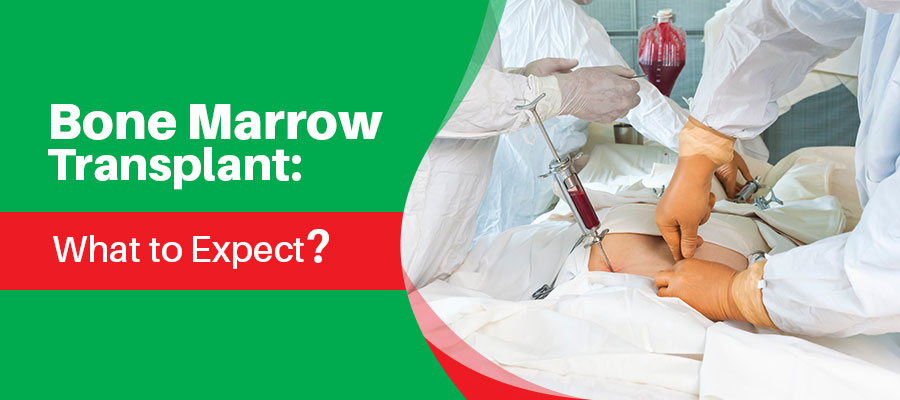
When bone marrow cells are diseased, damaged or wiped out, Bone Marrow Transplant (BMT) comes to the picture. It’s a medical procedure involving an infusion of healthy blood stem cells into the bone marrow via an IV line. The newly introduced cells multiply rapidly to generate fresh bone marrow capable of developing RBCs, WBCs and blood platelets. RBCs transport oxygen throughout the body, WBCs provide defence against diseases while platelets ensure clot formation. Infection and chemotherapy are the prime causes of bone marrow damage.
Why BMT works?
Besides other types of cells, the bone marrow is home to hematopoietic stem cells (HSCs). These are immature, fast replicating and unspecialized cells that can transform into RBCs, WBCs and platelets upon maturation. The fresh stem cellsintroduced into the bone marrow via bone marrow transplant surgery can generate enough blood cells to ensure oxygen transportation across the body and counter infections and bleeding disorders for the patient’s entire lifespan.
Collection of donor cells:
The to-be-transplanted stem cells are either derived from the patient’s own body or a donor, preferably parents or siblings. Two procedures are employed to obtain donor cells.
- Bone Marrow Harvest (BMH): The stem cells are extracted from the donor’s hip bones via minor surgery. The amount extracted is subject to the recipient’s weight.
- Leukapheresis: A certain amount of blood is taken out of the donor’s body, and WBCs comprising stem cells are separated while the RBCs are re-injected into the donor’s body. The WBCs are gathered and stored in a machine for transplantation.
For patients with malignancies, the stem cells are harvested or cultured before chemotherapy.
What to expect?
Bone marrow transplant surgery is a lifesaver but may expose the patient to various implications, some serious while some less so. The complications arise due to several factors, including the patient’s age, health status, type of BMT and condition for which BMT is provided.
- General Symptoms:
- Dipping blood pressure
- Chills and fever
- Headache and queasiness
- Mild to severe pain
- Breathing issues
- Serious Complications:
- Damage to liver, kidney, heart and other key organs
- GVHD, a serious condition characterized by the attack mounted by donor cells on the graft failure. It’s caused by the non-production of fresh cells by the newly infused stem cells.
- Mucositis, a condition where mouth and throat experience inflammation
- Untimely menopause in females
- Anaemia, cataract and bleeding in key organs, including brain and kidneys.
The risks can be mitigated to an extent if the patient:
- is young
- receives stem cells from blood relatives
- carries no other critical condition other than what he/she is being treated for
Recovery: The medical facility will be monitoring the patient for about a month for a safe and speedy recovery. The patient’s WBC count is checked regularly. Any rise in WBC count means the transplanted stem cells are working right. Complete recovery may take anywhere from three months to a year, depending on the condition, donor match and other key factors.

 Cancer Hospital in Gurgaon