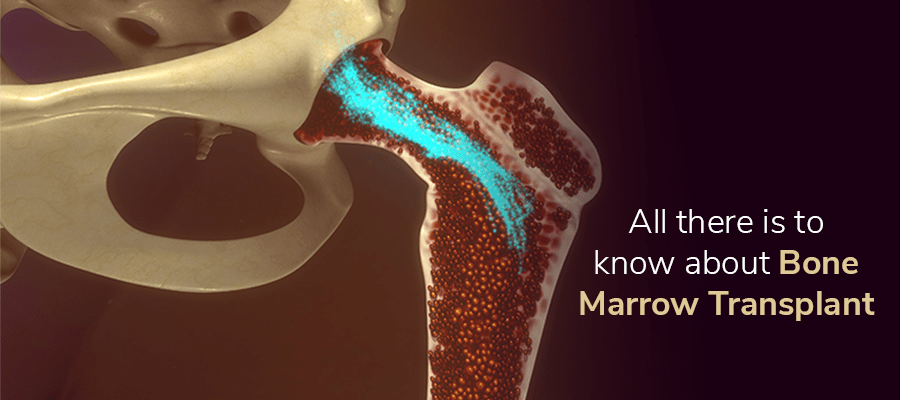
Bone marrow is a permanent fixture in some of your bones, especially those in the hip and thigh. It’s essentially a fatty tissue responsible for developing and storing RBCs, WBCs and blood platelets. When bone marrow malfunctions due to disease or chemotherapy, the oxygen supply is restricted, immunity compromised and blood clotting impaired. The situation calls for Bone Marrow Transplant (BMT), a therapeutic strategy for restoring the bone marrow function.
What is Bone Marrow Transplant?
A Bone Marrow Transplant (BMT) is exactly what it means, transplantation of healthy bone marrow in place of the damaged or diseased one. Prior to the procedure, the patient is subjected to chemotherapy to wipe out the non-functioning bone marrow. The healthy cells are then infused into the body through an IV line. Now, the cells travel to the bone and settle there to generate new RBCs, WBCs and platelets in sufficient quantities. The procedure is also called Stem Cell Transplant because the new cells introduced into the body are stem cells. Stem cells are juvenile blood cells capable of maturing and producing functional blood cells rapidly.
Why BMT?
Bone Marrow Transplant is a widely used intervention strategy for several malignant and non-malignant conditions. Primarily, the procedure is done to achieve three objectives:
- For conditions like leukaemia, and sickle cell and aplastic anaemia, BMT is implemented to swap non-functioning bone marrow with a healthy one to revive blood cell production.
- When conditions like Lymphoma and Neuroblastoma surface due to exposure to radiations during chemotherapy, BMT can restore the bone marrow’s innate function.
- If genetic issues like Hurler’s syndrome render the bone marrow damaged or non-functional, BMT restores function and disallow any further damage.
Some other conditions where BMT can be the lifesaver include:
- Lymphomas
- Renal cancers
- Thalassemia
- BMF and POEMS syndromes
- Plasma Cell Issues
- Various malignant and non-malignant tumours
Types of BMT:
There are multiple approaches to BMT, depending on the donor type.
- Autologous BMT: The patient is the donor, and hence the name. The physician is likely to conduct bone marrow harvest on the patient to take the stem cells. These stem cells are introduced back into the patient after intensive treatment when needed.
- Allogeneic BMT: The genetic type of the donor is similar to that of the patient. The donor can be the patient’s sibling, the parent or an unrelated person with a matching genetic type. Doctors often look out for unrelated donors in bone marrow registries.
- UC blood transplant: Soon after the childbirth, the doctor will take out the stem cells, test and freeze them for later use. The stem cells thus acquired are considered to be the best for their ability to mature fast and produce healthy, functional blood cells.
Post-treatment requirements:
A safe and quick recovery post BMT can be ensured through the following measures:
- The blood cell count is depleted, and hence the blood transfusions
- The risk of GVHD runs high, which is why immune restrictive drugs are administered
- Regular tests and post-procedure care can prevent complications
Since the immunity is impaired, immunity boosting foods and drugs are recommended.

 Cancer Hospital in Gurgaon